Modalities
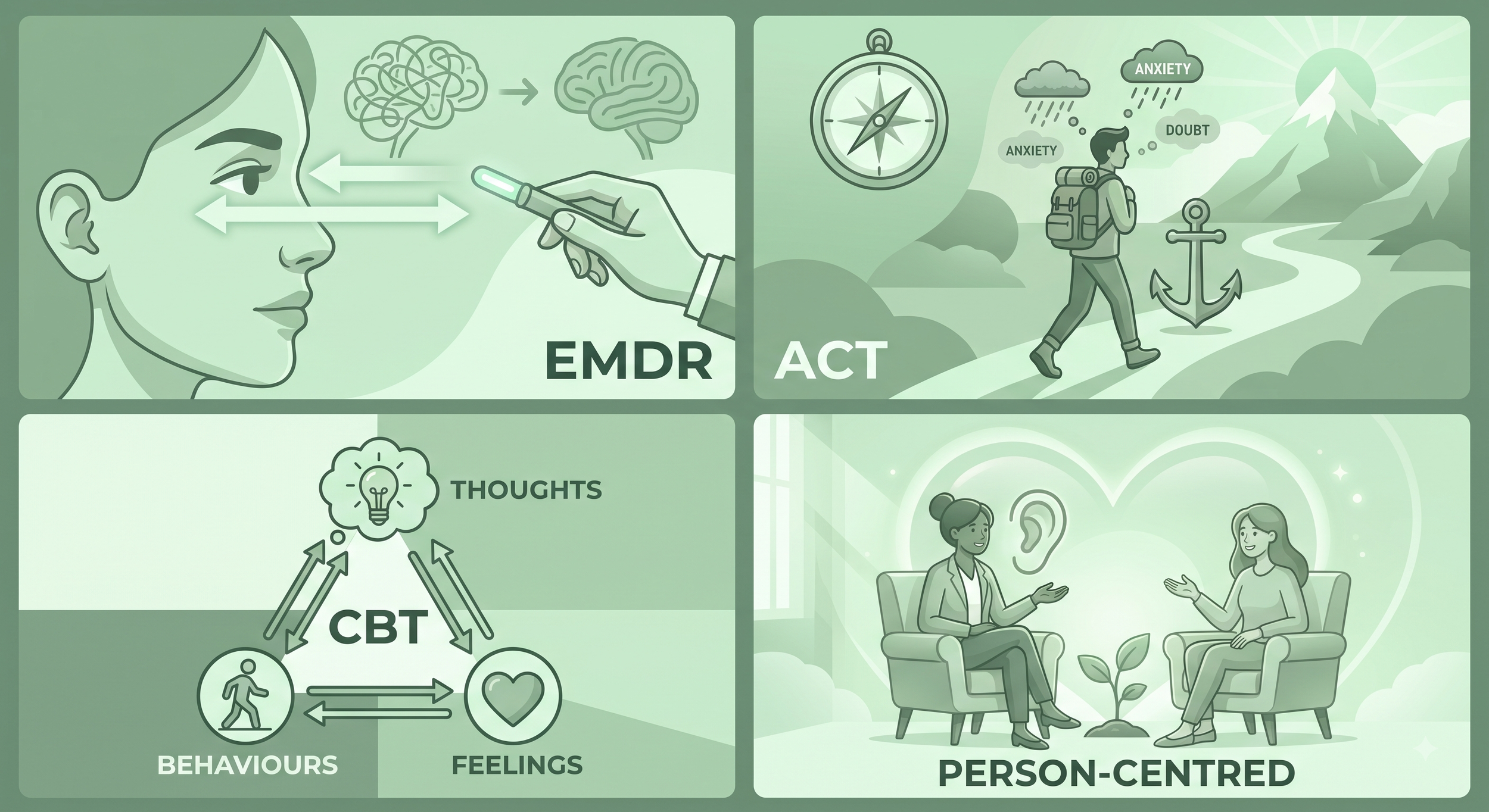
Eye Movement, Desensitisation and Reprocessing (EMDR)
Unlike traditional talk therapy, EMDR uses bilateral stimulation, such as side-to-side eye movements, sounds or tapping, while you focus on a distressing memory.
Bilateral Stimulation: Moving your eyes or attention from side to side helps your brain process memories that may feel stuck.
Desensitisation: As the memory is processed, the intensity of the emotions and physical sensations connected to it can reduce.
Reprocessing: EMDR can help you develop a new perspective on what happened, so the memory feels less overwhelming and you can feel more present and in control.
Acceptance and Commitment Therapy (ACT)
ACT focuses on helping you relate differently to difficult thoughts and feelings.
Rather than fighting, judging or avoiding them, ACT encourages you to acknowledge them with greater acceptance and self-compassion.
ACT incorporates mindfulness and grounding to help you stay connected to the present moment. It also explores your values and what really matters to you — helping you consider the person you want to be and the life you want to create.
Cognitive Behavioural Therapy (CBT)
CBT focuses on the connection between your thoughts, feelings and behaviours.
It can help you recognise patterns that may be contributing to distress and develop more helpful ways of responding.
Together, we explore unhelpful thinking patterns and behaviours, while building practical strategies to manage difficult emotions, cope with challenges and make meaningful changes in your life.
Person-Centred Counselling
Person-centred counselling provides a supportive, non-judgemental space where you can explore what you're experiencing at your own pace.
Rather than being told what you should do, the focus is on understanding your experiences and supporting you to find your own way forward.
It is grounded in empathy, genuine connection and acceptance, helping you build greater self-awareness, trust in yourself and confidence in your own decisions.